

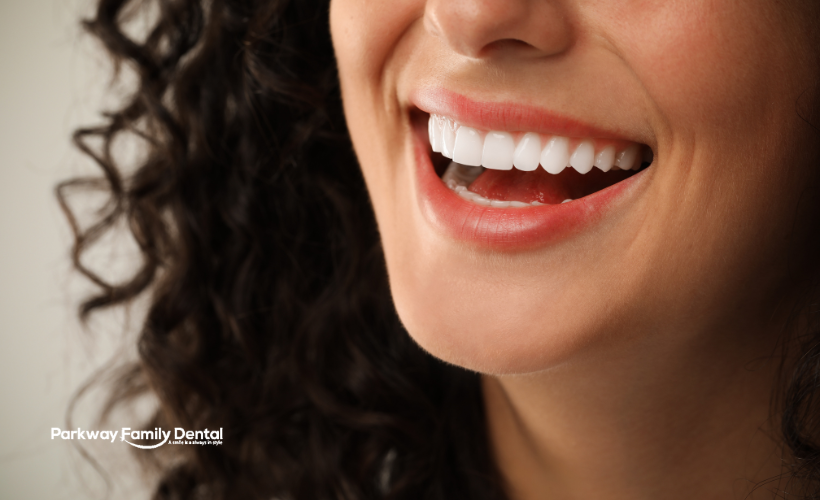
Porcelain veneers are thin, custom-made ceramic shells bonded to the front surface of teeth to fix dental issues like stains, chips, gaps, and misshapen teeth. This dental procedure delivers a lasting cosmetic result while removing very little of the natural tooth. At Parkway Family Dental in Windsor, Ontario, the process of getting veneers follows six clear steps. From the first dental impressions to final installation… so patients know exactly what to expect.
How Porcelain Veneers Compare to Other Cosmetic Options
Different cosmetic treatments solve different problems. Teeth whitening removes surface stains but does not change tooth shape. Invisalign straightens teeth but does not correct colour or chipping. Dental bonding repairs minor chips quickly but wears faster than porcelain. Dental crowns cover the entire tooth and are better suited for teeth that are badly damaged.
Porcelain veneers are highly effective when a patient wants to improve the colour, shape, and size of multiple teeth at once. The material is biocompatible, safe for long-term contact with gum tissue. Porcelain resists staining far better than composite resin, keeping its colour stable for 10 to 15 years. For patients who want long-lasting results, both aesthetics and durability make porcelain ceramic veneers the stronger choice.
A veneer only touches the front face of the tooth, removing 0.3 to 0.7 mm of enamel — roughly the thickness of a contact lens. A dental crown wraps around the entire tooth and requires much more enamel removal. Veneers are the more conservative option when the underlying tooth is structurally sound.
The Step-by-Step Guide to Getting Veneers
The process of getting veneers involves six stages spread across two to three visits. The exact timeline runs two to four weeks from start to finish, depending on the number of veneers being placed and lab turnaround time. Here is what veneers involves at each step.
Step 1 — Initial Consultation and Treatment Planning
Getting veneers starts with a full dental exam. The dentists at Parkway Family Dental check the health of your teeth and gums before any treatment is planned. Gum disease and untreated cavities need to be resolved first, as veneers bond to healthy enamel, so placing them over compromised teeth creates problems down the line.
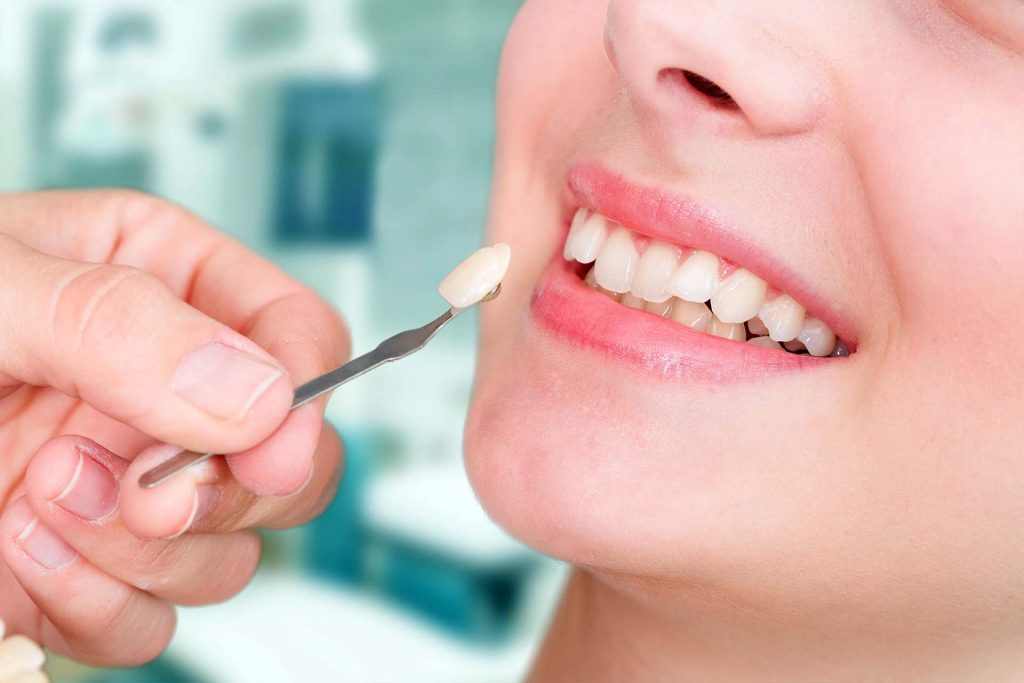
When your teeth are cleared as healthy, digital X-rays and photographs are taken to map out the treatment. Digital smile design software is used to personalize your plan and show you a preview of the expected outcome. Shade selection also happens at this stage, using a professional colour guide to find a veneer shade that blends naturally with your surrounding teeth or creates a brighter, more uniform result.
Step 2 — Tooth Preparation
A thin layer of enamel is removed from the front of each tooth that will receive a veneer. This creates the space the shell needs to sit flush with the surrounding teeth. Local anaesthetic is offered to support patient comfort during this step, which is especially helpful for anyone with sensitive teeth.
The enamel removal is permanent, making veneers an irreversible dental procedure. Some patients qualify for minimal-prep or no-prep veneers, which require even less reduction. Your Parkway Family Dental dentist will confirm which approach suits your teeth.
Step 3 — Taking Dental Impressions
Dental impressions produce a precise, three-dimensional model of the prepared teeth. The dental laboratory uses this model to build your veneers, so the accuracy of this stage directly determines the final result.
Two methods are available:
- Digital technology — An intraoral scanner creates a 3D digital model that is sent to the lab electronically. It is faster and more accurate than traditional methods, with no risk of the model distorting in transit.
- Traditional methods — A soft impression material is loaded into a dental tray, seated over the prepared teeth, and left to set. The hardened mold is then packaged and sent to the lab.
Most practices now prefer digital impressions because they reduce the chance of errors and shorten the time before the lab begins fabrication.
Step 4 — Temporary Veneers
Temporary veneers are placed over the prepared teeth while the permanent ones are being made, a lab process that takes 7 to 14 days. These are made from composite resin or acrylic and attached with a light, temporary adhesive so they can be taken off cleanly at the next appointment.
Temporaries do three things: they protect the sensitive prepared teeth, keep your smile looking presentable, and let you test the new shape and length before committing to the permanent result. Avoid hard or sticky foods during this period, as temporaries are not as strong as the final porcelain restorations.
Step 5 — Lab Fabrication
With porcelain veneers made entirely by hand, the ceramists inside the dental laboratory determine how natural the final result looks. Understanding how veneers are made helps patients appreciate why the impression stage matters every dimension in the mold is reproduced in the finished shell.
Ceramists match each veneer’s colour, shape, and translucency to the specifications agreed at consultation. The three most common ceramic materials are feldspathic porcelain for natural light reflection, pressed ceramic for greater strength, and layered ceramic for a balance of both. Each veneer is inspected before leaving the lab.
Step 6 — Final Bonding and Installation
The final appointment is when the permanent veneers are placed. This sequence is followed to secure the veneers and ensure a strong, lasting bond:
- Temporary veneers are removed and the teeth are cleaned thoroughly
- Each veneer is seated with a try-in paste to check colour, shape, and bite fit — confirming the final result before any permanent cement is applied
- The enamel is lightly etched with a mild acid gel to improve dental bonding strength
- A bonding agent is applied, followed by resin cement placed inside the veneer
- The veneer is pressed into position and hardened with a blue LED curing light in seconds
- Excess cement is cleaned off, the bite is adjusted, and each veneer is polished to its final finish
Once the cement sets, the bond is permanent and the veneers function like natural teeth.
How to Keep Your Veneers in Good Shape
Porcelain veneers are highly durable, but how long they last depends on daily habits. The American Dental Association recommends consistent oral care as the foundation of any dental restoration. Some sensitivity and discomfort in the first few days after placement is completely normal — the teeth are adjusting to the new shells and it fades on its own within a week for most patients.
These habits help veneers to last:
- Brush twice daily with a soft-bristled toothbrush and non-abrasive fluoride toothpaste
- Floss daily, paying attention to the gumline along each veneered tooth
- Avoid biting hard objects like ice, hard candy, or fingernails
- Wear a night guard if you grind your teeth — bruxism is the most common cause of veneer damage
- Visit the dentist every six months so bonded edges can be checked and cleaned
With consistent oral care, long-lasting results of 10 to 15 years are well within reach. The daily teeth process of brushing, flossing, and attending regular check-ups is all it takes to protect veneers for the long term.
Who Is a Good Candidate for Veneers?
Porcelain veneers are suited to adults with healthy gum tissue and sufficient enamel for bonding. The treatment works well for patients managing permanent stains, minor chips, misshapen teeth, small gaps, or uneven tooth length. Those with significant alignment problems are better served by Invisalign first, once the bite is stable, veneers can address any remaining dental issues affecting the look of the smile.
The team at Parkway Family Dental reviews each patient’s dental history, photographs, and X-rays before confirming whether veneers are the right choice. Patients who are not yet ready receive a clear treatment plan to get there.
Book Your Consultation at Parkway Family Dental
Parkway Family Dental has served Windsor-Essex County since 2002. Our team guides patients through the full porcelain veneer process from start to finish — initial consultation, shade selection, dental impressions, lab fabrication, and final bonding — using digital technology and trusted ceramists to deliver precise, natural-looking results.
Porcelain veneers create a permanent improvement in the look and feel of your smile. Contact Parkway Family Dental today to book your consultation and find out whether veneers are the right step toward the beautiful smile you want.